Living Near Dams Informational Booklets
The Association of State Dam Safety Officials (ASDSO) has released an updated version of the two popular Living Near Dams informational booklets.
The booklet series was created to educate policymakers, dam owners, and downstream communities about the basics of dams and associated risks. The 2026 versions were prepared by the ASDSO Dam Owner Outreach Committee, with support from the FEMA National Dam Safety Program.
Digital versions of the booklets are available below. To request hard copies, email [email protected].
Living Near Dams: Know Your Risks
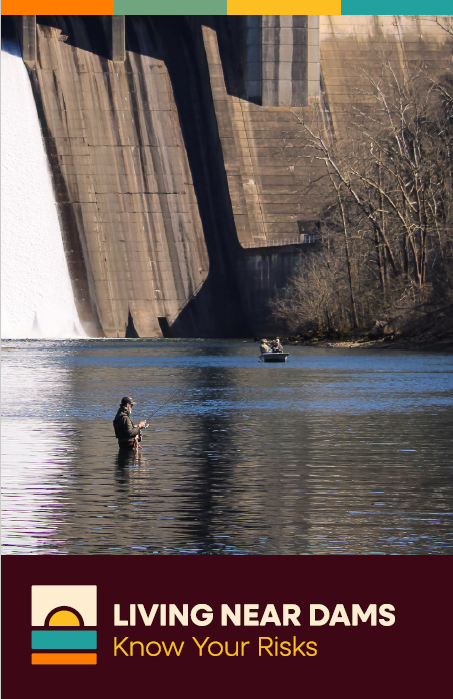 Dams provide drinking water, hydroelectric or water power, flood control, recreation and many other benefits to people or local economies. However, dams can pose significant risks to people living downstream should they fail.
There are dams in every U.S. state. It is important to know if you and your loved ones live, work or recreate in areas that may be affected by the presence of a dam and what to do if this is the case.
This booklet was created to help answer questions about dams: what purposes they serve, what risks are associated with dams and where you can get information about how to react if you are affected by a dam.
View as an Interactive Flipbook
View or Download as a PDF
Living Near Dams: Extreme Rainfall Events
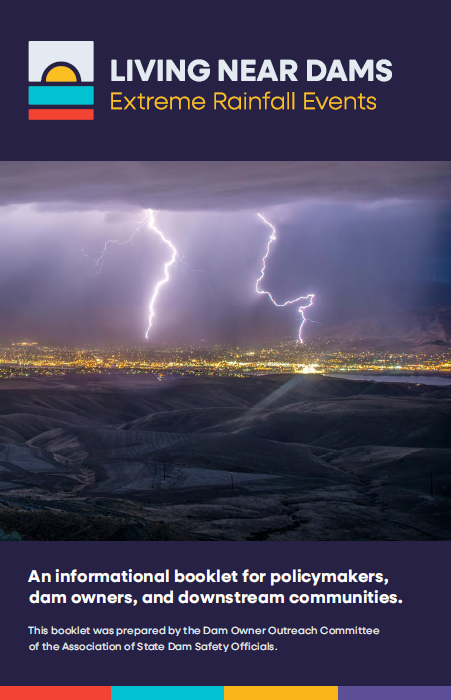 The risks associated with dam failure and flooding in the U.S. continue to increase dramatically as a direct result of the occurrence of extreme rainfall events, local land development, and a failure to adequately maintain or upgrade existing infrastructure.
Extreme rainfall events happen almost every day somewhere—maybe not in your backyard or above a dam in your community, but around the country and the world. Sometimes we see them in the news on TV, and sometimes these extreme rainfall events get names like Katrina, Irene, Helene, and Sandy or are referenced by location, like Boulder, Colorado (2013), or Pensacola, Florida (2014), or Central, Texas (2025).
Climate experts put all the historical extreme rainfall events into a database to determine how often they happen, how big they can get, and what the threat is for individual communities. Experts consider hundreds of years of data at thousands of locations and have a broad understanding of the climate and the potential for extreme rainfall events. They know that extreme rainfall happens, may exceed the years of available data, and may be happening more often.
Dam engineers use this climate database to predict the extreme rainfall events they use in dam design. Mother Nature very often surprises us with the unexpected ferocity of her storms. Climate data helps engineers anticipate these surprises by allowing them
to estimate the magnitude and frequency of extreme storm events.
This publication will help explain and justify the engineering principles involved with predicting extreme rainfall events and how they are used to design safe, functional, and economical dams. It will connect the concepts of rain, dams, failure, and flooding impacts downstream.